



A fireplace can look tidy from the living room, yet its chimney may hold layers of soot, sticky creosote, fallen mortar, or even an animal nest. These materials can restrict airflow and create risks when you light another fire. United Home Services helps homeowners understand why regular chimney care matters and what a proper cleaning should cover.
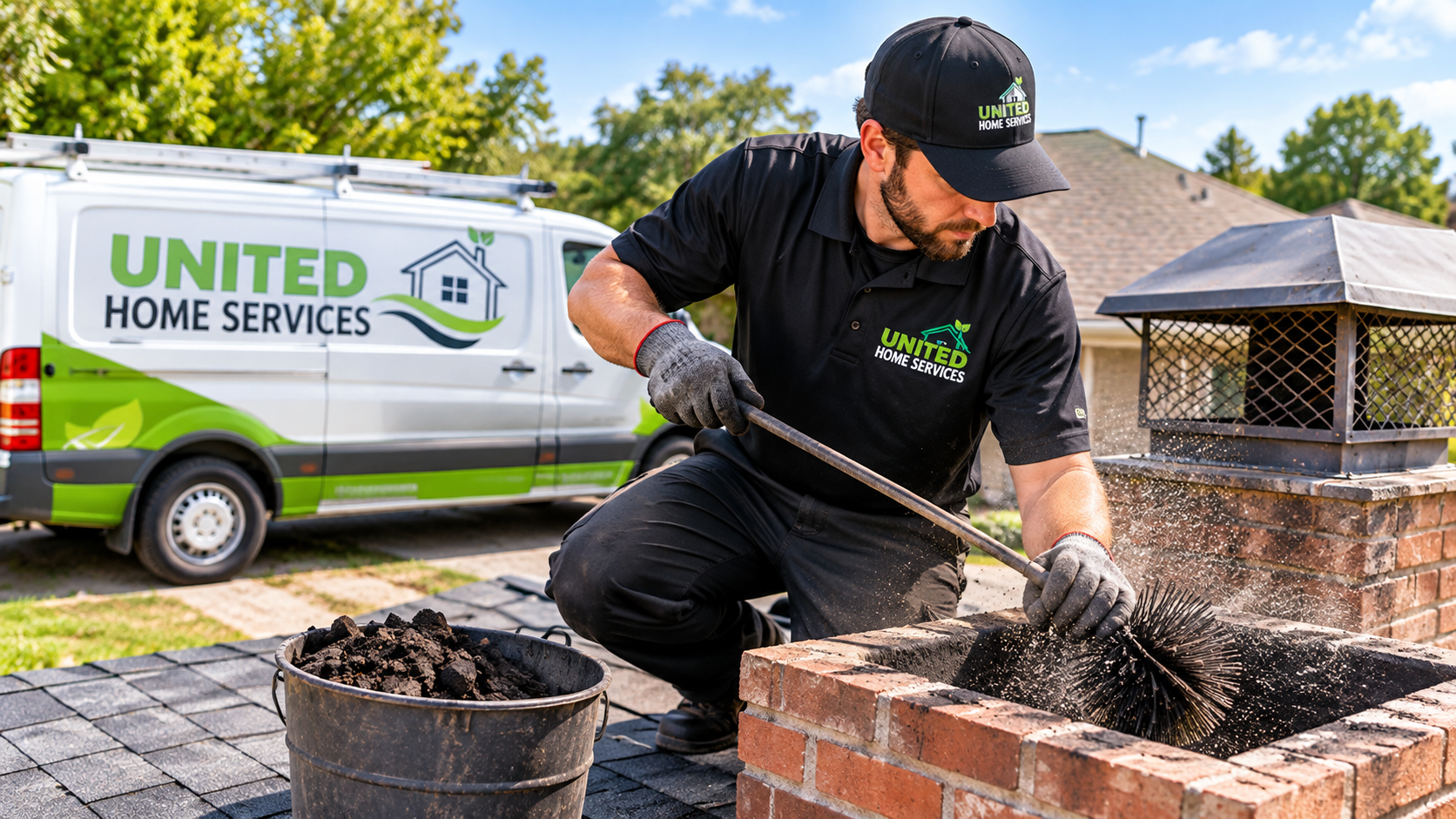
Professional chimney sweeping goes beyond brushing the visible firebox. A trained technician works through the flue, smoke chamber, damper area, and other accessible parts of the system. The work removes deposits and loose debris that can affect ventilation. It can also reveal damage that needs a closer inspection.
What builds up inside a chimney? How does a sweep remove it without spreading dust through your home? Knowing what the service covers helps you plan maintenance and ask better questions before hiring a contractor.
What builds up inside a chimney?
Each fire leaves small amounts of residue behind. Over time, smoke, ash, moisture, and particles collect on the inner walls and other parts of the chimney. The amount depends on the fuel, fire temperature, ventilation, and how often you use the fireplace.
The main materials removed during a chimney service include:
- Soot: A fine black or brown powder left by burning fuel. It can coat the flue, smoke chamber, and firebox.
- Creosote: A combustible residue formed as wood smoke cools and condenses inside the chimney. It may appear flaky, crunchy, sticky, or hard.
- Ash and loose charcoal: Small remains from burned wood that collect in the firebox and nearby areas.
- Animal nests: Birds and other animals may carry twigs, leaves, and nesting material into an open chimney.
- Leaves and outdoor debris: Wind can push dry leaves, small branches, and other loose material through an unprotected chimney opening.
- Loose masonry material: Small pieces of mortar, brick, or flue liner may fall into the chimney when parts of the structure deteriorate.
Creosote deserves close attention because it can catch fire. The Chimney Safety Institute of America (CSIA) explains that deposits can restrict venting, contribute to chimney fires, create odours, and damage chimney interiors.
The amount of residue can vary from one home to another. A fireplace used every evening through winter may collect deposits faster than one used for a few fires each year. Burning wet wood or running slow, smoky fires can increase creosote formation.
Why does this matter beyond keeping the fireplace tidy? A blocked or heavily coated flue may stop smoke and combustion gases from leaving the home as intended.
The U.S. Fire Administration estimated 27,200 residential heating fires in 2024. Those fires caused 145 deaths, 475 injuries, and around $445.9 million in property losses. These figures cover residential heating fires as a whole, not chimney fires alone, but they show why heating equipment needs regular care.
Common chimney deposits and removal methods
Not every chimney contains the same material. A technician must identify the deposit before choosing a brush, tool, or cleaning method. Using the wrong equipment can damage a liner or leave stubborn residue behind.
| Material or blockage | Typical appearance | Removal method | Main concern |
|---|---|---|---|
| Loose soot | Fine black powder | Chimney brush and filtered vacuum | Airflow restriction |
| Flaky creosote | Dry, flaky deposits | Correctly sized chimney brush | Combustible buildup |
| Hard creosote | Thick, rough or tar-like coating | Specialist rotary tools or approved treatment | Difficult removal |
| Glazed creosote | Shiny, hard coating | Specialist assessment and treatment | High fire risk |
| Nest and leaves | Twigs, leaves, feathers | Manual removal and suitable tools | Blocked flue |
| Loose masonry | Mortar or liner fragments | Debris removal and damage assessment | Structural damage |
Soot and loose ash
Soot often forms a soft layer along the flue walls. A professional uses a brush that suits the chimney’s shape and liner material. A high-filtration vacuum collects loose particles during the work.
Ash can collect in the firebox, smoke shelf, and lower parts of the chimney. The technician removes accessible material and checks for signs of unusual buildup.
Creosote deposits
Creosote can form in several stages. Early deposits may come away with standard brushing. Thick or hardened layers can need rotary equipment or a specialist treatment.
Jim Albritton-McDonald, County Fire Prevention Officer at Sublette County Unified Fire, describes how creosote can range from soft soot-like material to hard, tar-like and glazed deposits. His public safety guidance explains why a basic brush may not remove the hardest form.
A technician should explain the deposit type before recommending extra work. Ask to see photographs or video when a costly treatment is proposed.
Nests and other blockages
Birds may build nests in chimneys with missing or damaged caps. Leaves and small branches can enter through the same opening. A sweep removes accessible nesting material and checks whether the chimney cap needs attention.
Never light a fire to burn away a nest or blockage. Heat can ignite dry nesting material and send smoke into the home.
How a professional chimney sweep works
A proper visit follows a clear process. The technician prepares the work area, checks the system, removes deposits, and explains any concerns found during the service.
- Initial discussion: The technician asks about fireplace use, fuel type, smoke problems, odours, and the last cleaning date. These details help identify areas that may need attention.
- Work area protection: Drop cloths cover nearby floors and furniture. The technician prepares a suitable vacuum and cleaning tools to control dust and soot.
- Initial inspection: The sweep checks accessible parts of the firebox, damper, smoke chamber, flue, and chimney top where access allows. The inspection helps identify visible blockages, deposits, and damage.
- Deposit removal: The technician uses a correctly sized brush and rods to loosen soot and ordinary creosote. Special rotary equipment may be needed for tougher deposits. Loose material is collected with a suitable vacuum.
- Debris removal: The sweep clears accessible ash, nesting material, leaves, and loose debris. The technician checks the smoke shelf and other areas where material may settle.
- Final checks and report: The technician reviews the cleaned areas and explains any findings. If the flue needs a more detailed inspection or repairs, the contractor should explain why and provide a separate estimate.
A standard sweep does not repair cracked flue tiles, damaged mortar, faulty flashing, or a broken chimney cap. Cleaning removes deposits; inspection assesses the condition of the system. These are related services, but they do not serve the same purpose.
CSIA guidance follows NFPA 211, which calls for chimneys, fireplaces, and vents to receive an inspection at least once a year. Cleaning and repairs should take place when the inspection shows they are needed.
Chimney sweeping costs and local factors
The final bill depends on the chimney, the amount of buildup, and the work required. A simple sweep in a well-maintained single-flue chimney usually costs less than a job involving heavy creosote or a blocked flue.
HomeGuide’s February 2026 cost guide places the typical US chimney sweeping range at $150 to $375. It reports lower prices for some gas fireplace services and higher costs for difficult jobs. These figures are broad US estimates, not a fixed quote for every Houston home.
For homeowners in Houston, the final price can change based on:
- Chimney type: Masonry, metal, factory-built, and stove flues may need different tools and cleaning methods.
- Number of flues: Each flue may need separate attention, which can increase labour time.
- Deposit level: Heavy creosote or hardened glaze takes more time than loose soot.
- Roof access: A steep roof, tall chimney, or difficult access point can affect the service cost.
- Blockages: Removing a nest or a large amount of outdoor debris may require extra work.
- Inspection needs: A camera inspection or a more detailed assessment can add to the price.
Ask whether the quoted price includes the inspection, firebox cleaning, smoke shelf, debris removal, and final report. Request a written breakdown before approving extra work.
A low starting price may cover only a basic visit. Make sure you know what the technician will do before booking.
Choosing a chimney sweeping contractor
A good contractor explains the work before starting. You should know what the service includes, which areas the technician will inspect, and what happens if they find damage.
Start by checking the contractor’s experience with your chimney type. A masonry fireplace and a factory-built metal system do not always use the same brushes or cleaning methods. Ask whether the technician has relevant training and current credentials, such as CSIA certification.
Request clear answers to these questions:
- Does the service include a chimney inspection?
- Will the technician check the flue for nests and other blockages?
- What tools will they use on my chimney liner?
- Do they provide photos or a written report?
- Are repairs priced separately from the sweep?
- Does the quoted price include all expected labour and debris removal?
A specialist who regularly handles chimney work may be better prepared for flue deposits, liner concerns, and venting issues than a general handyman. For Houston homeowners comparing providers, United Home Services is one local company to ask about the scope of its chimney care, inspection process, and written estimates.
Pay attention to how a contractor explains a problem. A professional should show the affected area, describe the issue in plain language, and explain the next step. Be cautious if someone recommends expensive treatment without showing the deposit or explaining why standard brushing will not work.
Houston’s climate brings periods of heavy rain, humidity, and occasional cold weather. Ask the contractor to check visible signs of water entry, damaged caps, and loose masonry during the visit. A sweep can report these concerns, but repair work may need a separate assessment.
Local rules and inspection standards
In the United States, NFPA 211 provides guidance for chimneys, fireplaces, vents, and solid-fuel-burning appliances. It covers inspection, maintenance, and safe venting practices. The standard is a useful reference when discussing chimney service with a contractor.
In Houston, the City of Houston’s permitting system handles permits for work covered by local construction codes. Routine sweeping is different from construction or structural repair. If the job includes rebuilding masonry, changing a chimney structure, or other construction work, ask the contractor whether a permit is required for the planned work.
Frequently asked questions
What does professional chimney sweeping remove?
A sweep removes soot, loose creosote, ash, and accessible debris from the chimney system. The service may include removing leaves, nesting material, and loose deposits from the firebox, smoke shelf, and flue. Hard glazed creosote may need specialist treatment beyond standard brushing.
How often should I arrange chimney sweeping?
Have your chimney inspected at least once each year, following NFPA 211 guidance. The inspection helps determine whether cleaning is needed. A fireplace used often, wet wood, poor airflow, or heavy creosote can mean more frequent cleaning. Your technician can advise based on the deposits and condition found.
How much does chimney sweeping cost in Houston, TX?
US cost guides place many standard chimney sweeping jobs between $150 and $375. Houston prices can differ based on chimney height, flue count, access, and deposit levels. Ask local contractors for written estimates that state whether inspection, vacuuming, and debris removal are included.
What materials can a chimney sweep remove?
A technician can remove loose soot, ash, ordinary creosote, leaves, and accessible animal nesting material. Specialist equipment may be needed for hard creosote deposits. A sweep can remove loose masonry fragments, but damaged bricks, mortar, or flue liners need a separate repair assessment.
Can a chimney sweep remove hardened creosote?
Some hardened creosote can be removed with specialist rotary tools or approved treatment methods. The correct method depends on the deposit and the liner material. A technician should assess the buildup before recommending extra work. Standard brushing may not remove a thick, glazed coating.
Is chimney sweeping necessary for gas fireplaces in Houston?
Gas systems produce different combustion by-products from wood-burning fireplaces, yet their vents and chimneys can still collect soot, moisture, debris, or animal nesting material. Annual inspection remains important. Ask a qualified technician to check the venting system and follow the appliance manufacturer’s maintenance instructions.
Does chimney sweeping include an inspection?
Many contractors combine sweeping with an inspection, but the exact scope varies. A sweep removes deposits, whereas an inspection checks the condition of the chimney and venting system. Ask whether the service includes a visual inspection, a written report, or a camera inspection when needed.
Do I need a permit for chimney sweeping in Houston?
Routine sweeping is generally maintenance rather than construction work. Structural repairs, rebuilding, or changes to the chimney may fall under local construction rules. The City of Houston’s permitting office can clarify requirements for a planned project. Ask your contractor to confirm permit needs before repair work begins.
How does Houston weather affect chimney maintenance?
Houston’s humidity and heavy rain can contribute to moisture problems when a chimney has damaged masonry, flashing, or a missing cap. Periods of limited fireplace use can leave time for birds or other animals to enter an open flue. Annual checks help identify these concerns before the next fire.
How long does a chimney sweeping appointment take?
A routine visit often takes around one to two hours, though the time varies by chimney design and condition. Multiple flues, heavy creosote, difficult roof access, or blockages can extend the appointment. Ask the contractor for an estimated time after sharing details about your fireplace.
Can I use a chimney cleaning log instead of hiring a sweep?
A cleaning log may loosen some deposits, but it does not remove all creosote or clear every part of the chimney. It cannot check for cracked liners, damaged masonry, or hidden blockages. Use such products only as a supplement when permitted by the product instructions, not as a replacement for professional inspection and cleaning.
What should I do if I suspect a chimney fire?
Stop using the fireplace and leave the area if you see flames or heavy smoke coming from the chimney. Contact emergency services if a fire may be active. Even after the flames stop, arrange a professional inspection before using the system again. Heat can crack flue tiles, damage metal parts, and weaken mortar joints.
A chimney can hold more than the soot you see around the fireplace. Creosote, nests, leaves, ash, and loose masonry can affect how the system works. Arrange an inspection, ask what the service includes, and request clear evidence if the technician finds a problem. If you need help reviewing your chimney care options in Houston, contact United Home Services and ask about the work required for your property. A clear assessment can help you plan the next step with confidence.