



Your heating and cooling system can only work as well as the air ducts that carry its air. When those ducts develop leaks, conditioned air escapes into walls, ceilings, and attics instead of reaching your rooms. The result is uneven temperatures, higher energy bills, and poorer indoor air quality. The challenge is that most leaks are hidden from view. At United Home Services, we help homeowners find and solve duct problems every day. This guide explains how to identify and fix air duct leaks behind walls and ceilings, and when it is time to call a professional.
Why Air Duct Leaks Are a Bigger Problem Than They Look
Air duct leaks are easy to ignore because you cannot see them. According to ENERGY STAR, a typical home loses roughly 20 to 30 percent of the air moving through its duct system to leaks, holes, and poor connections. Your system then runs longer to reach the temperature you set, which wastes energy and adds wear to the equipment.
Leaks also affect health and comfort. Ducts that run through walls, ceilings, and attics can pull in dust, insulation fibers, and humidity from those spaces and push them into your living areas. Over time, this can aggravate allergies and leave rooms feeling stuffy or damp.
Common Causes of Duct Leaks
Knowing why leaks happen helps you know where to look. The most common causes include:
- Loose or disconnected joints: Duct sections can separate over time because of vibration and temperature changes.
- Deteriorated sealant or tape: Old tape and mastic dry out, crack, and peel away.
- Poor installation: Rushed work often leaves gaps at seams and vent connections.
- Physical damage: Renovations, pests, and people working in attics can crush, tear, or puncture ducts.
- Age and corrosion: Metal ducts can rust, and flexible ducts can tear or sag over the years.
Warning Signs of Leaking Ducts
Even when ducts are hidden behind drywall, your home usually gives clues. Watch for these signs:
- Rooms that are always hotter or colder than others
- Weak airflow from vents, even with a clean filter
- Energy bills that rise without a change in usage
- Excess dust around vents and on furniture
- Whistling, hissing, or rattling sounds from walls or ceilings
- Damp spots, stains, or mold on ceilings and walls near ductwork
- An HVAC system that runs constantly but struggles to keep up
If you notice more than one of these, a duct leak is a likely cause.
How to Identify Air Duct Leaks Behind Walls and Ceilings
Finding hidden leaks takes a methodical approach. Start with simple checks and move to professional testing if needed.
1. Inspect Accessible Ducts First
Check ducts in the attic, basement, crawl space, and utility closets. Look for gaps at joints, peeling tape, sagging flexible ducts, rust, and disconnected sections. Dust streaks or dark smudges near seams often point to escaping air.
2. Feel for Air Movement
With the system running, hold your hand near joints and seams and feel for moving air. Pay special attention to the connections at the furnace, the plenum, and the boots where ducts meet the vents.
3. Try a Smoke or Incense Test
Hold a lit incense stick near suspected seams while the system is on. If the smoke is blown away or pulled in, you have found a leak. Keep the flame away from insulation and other flammable materials.
4. Listen and Compare Room Temperatures
Turn off the TV and listen near walls and ceilings for whistling or hissing. Use a thermometer to compare rooms. A room that is several degrees off from the thermostat reading may be served by a leaking or disconnected duct.
5. Check Walls and Ceilings for Visible Clues
Stains, bubbling paint, or damp patches can show that a duct is leaking air or collecting condensation. Dust marks around ceiling vents or on drywall near a duct run also deserve attention.
6. Use Professional Testing
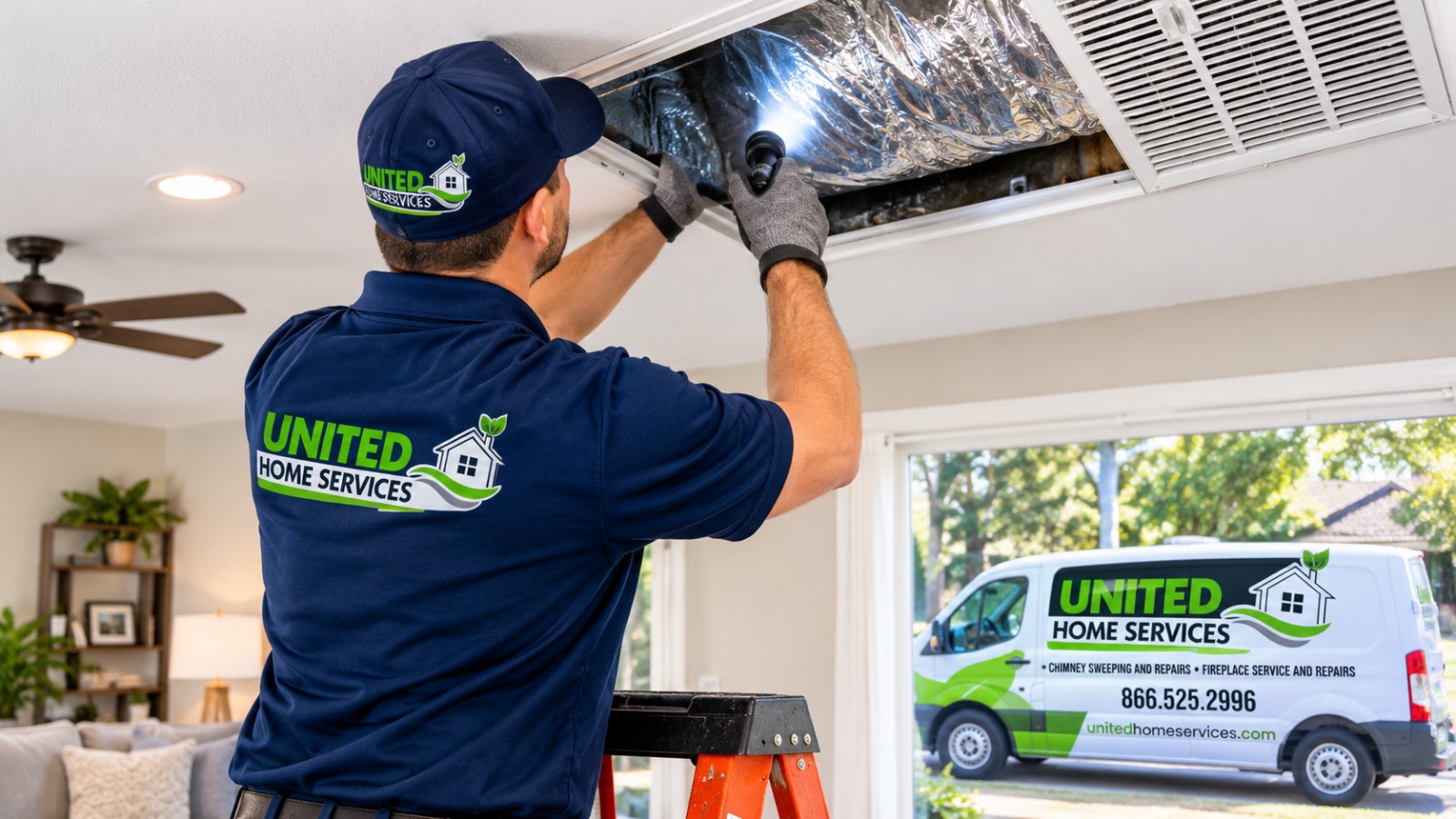
When ducts are fully enclosed, professionals can use duct pressure testing, camera inspections, and thermal imaging to locate leaks without tearing open walls. A professional air duct inspection is often the fastest and most accurate way to find the exact problem.
How to Fix Air Duct Leaks
The right fix depends on the size and location of the leak.
Fixing Small, Accessible Leaks
For minor leaks you can reach, use the correct materials:
- Mastic sealant: Brush it over seams and joints to create a durable, flexible seal.
- UL 181-rated foil tape: Use it for straight seams and small gaps. Avoid regular cloth duct tape, which dries out and fails quickly.
- Screws or clamps: Reattach loose sections mechanically before sealing.
- Insulation: Wrap repaired ducts, especially in attics and crawl spaces, to reduce energy loss and condensation.
Clean the surface first, because sealant sticks poorly to dust and grease.
Fixing Leaks Behind Walls and Ceilings
Hidden leaks are harder. Fixing them often means opening a small access point in the drywall, sealing or replacing the damaged section, and then patching the opening. Cutting blindly can damage wiring, plumbing, or the duct itself. This is where professional air duct repair makes a real difference. A trained technician can locate the leak precisely, repair or replace the damaged section, and confirm that the system performs properly afterward.
When to Replace Instead of Repair
Consider replacement if ducts are heavily corroded, crushed, contaminated with mold, or leaking in many places. Replacing a badly damaged section can cost less than patching it again and again.
Safety Tips Before You Start
- Turn off the HVAC system before touching ducts.
- Wear gloves, a dust mask, and eye protection in attics and crawl spaces.
- Check for wiring and pipes before cutting into drywall.
- In older homes, do not disturb duct wrap that might contain asbestos. Call a qualified professional.
How to Prevent Future Duct Leaks
- Schedule a duct inspection every few years and after renovations
- Change HVAC filters regularly to reduce strain on the system
- Keep pests out of attics and crawl spaces
- Avoid storing items on or against ducts
- Address unusual noises, odors, or temperature changes promptly
- Make sure new ducts are properly sealed during installation
Final Thoughts
Air duct leaks behind walls and ceilings can quietly drain your energy and comfort. By knowing the warning signs, checking accessible areas, and using safe sealing methods, you can handle many problems early. For hidden or severe leaks, professional help saves time, protects your home, and makes sure the repair lasts. Fixing leaks today means better airflow, lower bills, and healthier indoor air for years to come.