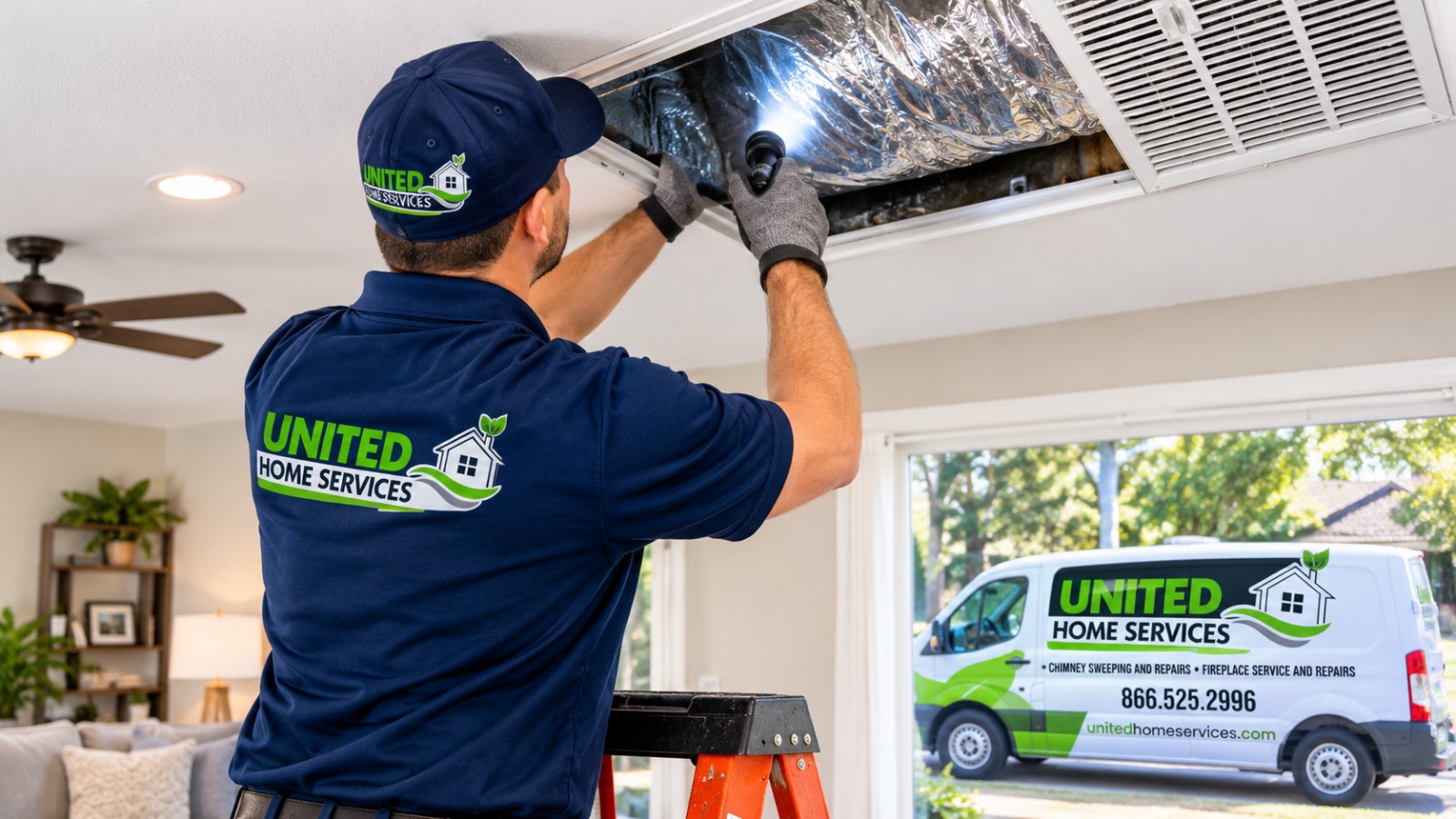



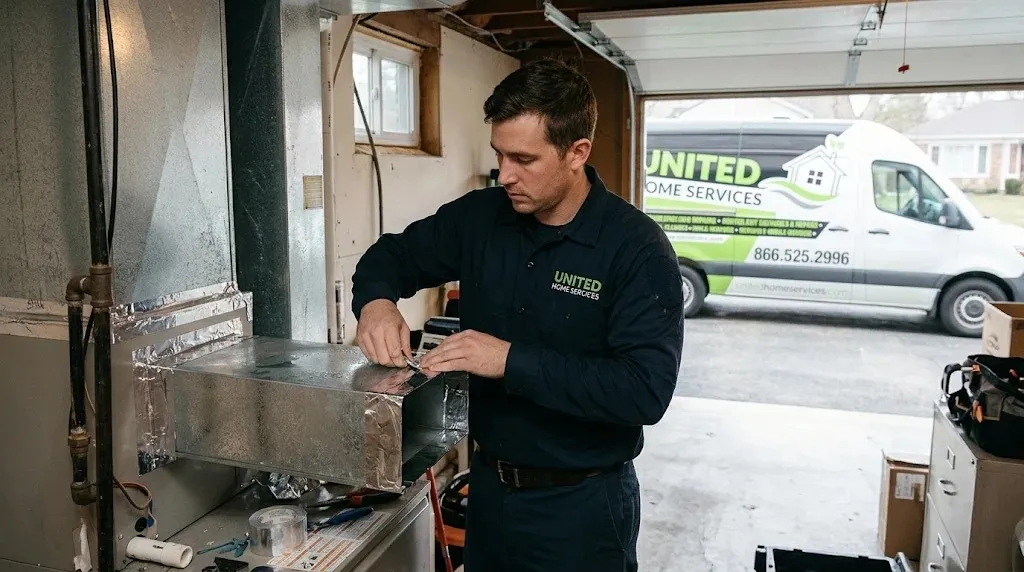

On a hot, sticky day, a cold glass of water quickly gets covered in droplets. The same thing can happen to your air ducts. When cold air flows through ducts in a warm, humid space, moisture forms on the outside of the metal or insulation, and over time it can drip, stain, and grow mold. At United Home Services, we help homeowners protect their HVAC systems and indoor air quality. This guide explains why air duct condensation happens, how to spot it, and what you can do to prevent it.
Why Does Condensation Form in Air Ducts?
Condensation happens when warm, moist air touches a surface that is colder than its dew point. In a cooling system, the supply ducts carry air that is far colder than the air around them. If those ducts run through a hot attic, a damp crawl space, or a humid wall cavity, moisture from the surrounding air condenses on the cold surface.
Humid weather makes this much worse. The more moisture the air holds, the sooner it turns into water when it touches the duct. That is why condensation problems show up most often in summer and in humid regions.
Common Causes of Air Duct Condensation
- Missing or poor duct insulation: Bare metal ducts or thin insulation allow cold surfaces to meet warm, humid air.
- Damaged or torn vapor barrier: The outer jacket keeps moisture out. Rips and gaps let humid air reach the cold duct surface.
- Air leaks in the duct system: Leaks let cold air escape and humid air get pulled in, creating wet spots at joints and seams.
- High indoor humidity: Moisture from cooking, showers, and weak ventilation raises the dew point inside your home.
- Oversized air conditioner: A system that is too large cools quickly, shuts off, and fails to remove enough humidity.
- Restricted airflow: Dirty filters or blocked returns make supply air colder, which increases condensation risk.
- Humid attics or crawl spaces: Roof leaks, poor ventilation, or ground moisture raise humidity around the ducts.
- Low thermostat settings: Very low settings keep supply air extra cold for long periods.
Signs of Condensation in Your Ducts
Because ducts are often hidden, you may notice the effects before you see the cause. Watch for:
- Water drips or stains on ceilings near vents or ductwork
- Moisture or “sweating” around supply registers
- Wet, sagging, or darkened duct insulation
- Rust or corrosion on metal ducts or boots
- A musty smell when the AC starts
- Visible mold or mildew on or near ducts
- Higher indoor humidity despite a running AC
Why Condensation Is a Problem
Moisture around ducts is more than a nuisance. Wet insulation loses much of its ability to insulate, so your system works harder and energy bills rise. Constant dampness can lead to mold growth, which can affect indoor air quality and trigger allergies. Dripping water can stain and damage ceilings and drywall, and it can corrode metal parts over time.
How to Prevent Air Duct Condensation
1. Insulate Ducts Properly
Insulation is your first line of defense. Ducts in attics, crawl spaces, and other unconditioned areas should be wrapped in insulation with an intact vapor barrier. Energy codes often call for around R-6 to R-8 for ducts in attics, but requirements vary, so check your local code or ask a professional. Make sure the insulation fits snugly with no gaps or compressed areas.
2. Seal the Vapor Barrier
The outer jacket must be continuous. Seal seams and overlaps with the correct tape or mastic, and repair any tears right away. A damaged vapor barrier lets moisture reach the cold surface and defeats the purpose of insulation.
3. Seal Duct Leaks First
Before you add or replace insulation, seal all duct joints and seams with mastic or UL 181-rated foil tape. Leaky ducts pull in humid air and release cold air, both of which feed condensation. Sealing also improves airflow and efficiency.
4. Insulate Boots and Register Connections
The boxes behind your registers, called boots, are common trouble spots. If they are uninsulated or poorly sealed, you may see “sweating” around vents. Insulate the boots and seal the gap between the boot and the ceiling or wall.
5. Control Indoor Humidity
Keeping indoor humidity in a healthy range, often around 30 to 50 percent, reduces the amount of moisture available to condense. Use exhaust fans in bathrooms and kitchens, fix plumbing leaks, and consider a whole-home dehumidifier if your home stays damp.
6. Make Sure Your AC Is Properly Sized
An oversized system short-cycles and never removes enough humidity. A professional load calculation can confirm whether your equipment matches your home.
7. Keep Airflow Strong
Replace filters on schedule, keep supply and return vents open, and do not block returns with furniture. Good airflow keeps the system balanced and prevents extremely cold supply air.
8. Improve Attic and Crawl Space Conditions
Fix roof leaks, make sure attic ventilation works, and use a vapor barrier or encapsulation on crawl space floors where appropriate. Lowering humidity around the ducts removes much of the moisture that causes condensation.
9. Use Reasonable Thermostat Settings
Avoid setting the thermostat much lower than needed. Moderate settings reduce the temperature difference between the duct and the surrounding air.
What to Do If You Already Have Condensation
- Find the source. Check for missing insulation, torn jackets, leaks, and humidity problems.
- Dry the area. Use fans or a dehumidifier to dry wet materials.
- Replace wet insulation. Once insulation is soaked, it rarely performs well again.
- Clean or treat mold safely. Small surface mold can be cleaned with proper protection, but widespread growth needs professional help.
- Seal and re-insulate. Fix leaks, repair the vapor barrier, and add insulation where needed.
Hidden or widespread problems are best handled by professionals. A trained technician can inspect the system, locate leaks, and complete professional air duct repair so your ducts are sealed, protected, and working as they should.
Safety Tips
Attics can reach extreme temperatures in summer, so work early in the day and take breaks. Wear gloves, a dust mask, and eye protection. Step only on solid framing, and turn off the HVAC system before touching ducts. If you suspect asbestos in older insulation, do not disturb it and call a qualified professional.
How to Maintain a Condensation-Free Duct System
- Schedule an annual HVAC and duct inspection
- Check attic and crawl space ducts every season
- Replace damaged insulation promptly
- Keep humidity under control all year
- Address musty smells and water stains immediately
Final Thoughts
Air duct condensation is a common but preventable problem in humid weather. Proper insulation, sealed ducts, good airflow, and balanced indoor humidity keep moisture away from your system. Catching problems early protects your ceilings, your air quality, and your energy bills. When in doubt, ask a professional to take a look before small drips turn into costly damage.