



Your thermostat says 72°F, but one bedroom feels like a refrigerator while another remains uncomfortably warm. You lower the temperature, wait, and still notice little improvement. Before assuming the air conditioner is failing, consider something less obvious: the ductwork responsible for carrying conditioned air throughout your house.
For homeowners looking for air duct repair in Plano, this is an important distinction. An HVAC system can produce heated or cooled air correctly, yet damaged, disconnected, or leaking ducts may prevent that air from reaching the rooms where it is needed.
Plano homes rely heavily on effective heating and cooling throughout North Texas’s changing seasons. When ductwork develops structural problems, everyday comfort can become difficult to maintain. United Home Services provides air duct inspection and repair services in Plano, helping homeowners identify duct-related concerns and explore appropriate solutions.
Why Your HVAC System Might Be Working Harder Than Your Home Feels
Think of ductwork as the distribution network of your heating and cooling system. The equipment generates conditioned air, while the ducts transport it through the property. If part of that network becomes damaged, the entire system can be affected.
The U.S. Department of Energy’s ENERGY STAR program estimates that approximately 20%–30% of air moving through a typical residential duct system can be lost through leaks, holes, and poorly connected sections. That wasted airflow can contribute to higher utility costs and uncomfortable rooms.
For a Plano homeowner, this can become particularly frustrating during a long summer when the air conditioner operates frequently. Instead of receiving the expected cooling throughout the house, some rooms may receive insufficient airflow while conditioned air escapes through damaged sections elsewhere.
Repairing the underlying problem is often more useful than repeatedly adjusting the thermostat.
Five Ductwork Problems That Deserve Attention
Not every duct issue looks the same. Some develop gradually as materials age, while others appear after physical damage, renovation work, or movement around accessible duct sections.
1. Air Escaping Through Loose Connections
Duct joints connect individual sections of the ventilation network. When these connections loosen or deteriorate, conditioned air can escape before reaching its destination.
You may notice:
- Weak airflow from certain registers.
- Rooms take longer to reach the thermostat setting.
- Unusual air movement around accessible duct connections.
- Increased heating or cooling costs without an obvious explanation.
A technician can examine accessible joints and determine whether suitable sealing or reconnection is necessary.
2. Torn or Crushed Flexible Ducts
Flexible ductwork is commonly used in residential HVAC installations because it can accommodate different routing requirements.
However, its flexible construction also makes it vulnerable to compression, tearing, and improper positioning. A crushed section may restrict airflow, while a damaged outer or inner layer can compromise the duct assembly.
The appropriate repair depends on the condition and extent of the damage. Minor problems may be repairable, whereas severely compromised sections may require replacement.
3. Disconnected Duct Sections
A disconnected duct can prevent a room from receiving the conditioned air intended for it. Depending on its location, the opening may also allow attic or other surrounding air to enter the system.
This problem can be especially difficult to identify because the affected section may sit above a ceiling or inside an attic.
A proper inspection helps establish whether the duct has separated completely, developed a loose joint, or suffered additional damage.
4. Deteriorated Duct Insulation
Air sealing and insulation perform different jobs. Sealing limits unwanted air leakage, while insulation slows heat transfer through duct walls.
When insulation becomes damaged, compressed, or detached, conditioned air can gain unwanted heat during summer or lose heat during colder weather.
This matters when ductwork passes through an unconditioned attic or another space exposed to outdoor temperatures.
5. Blockages and Restricted Airflow
Not every airflow problem requires repairing a leak. A kinked flexible duct, obstructed section, poorly positioned damper, or other restriction can interfere with air distribution.
Cleaning may address accumulated debris when contamination is present, but it will not correct a crushed duct or disconnected joint.
Identifying the actual cause is essential before deciding which service is appropriate.
Plano’s Weather Makes Ductwork Condition Worth Checking
North Texas experiences considerable temperature changes throughout the year. Plano homeowners depend on their HVAC systems for summer cooling as well as winter heating.
Ductwork located in an attic faces a particularly demanding environment. During hot weather, attic temperatures can rise considerably above indoor temperatures. If the duct insulation is inadequate, heat can transfer into the conditioned air traveling toward living spaces.
Winter creates the opposite challenge. Heated air can lose warmth while traveling through poorly insulated duct sections.
There is also a comfort issue beyond temperature alone. Leaks in supply and return ducts can affect system pressure and air distribution, making certain rooms feel consistently different from others.
When evaluating an air duct system in Plano, it makes sense to consider:
- The condition of duct sections inside accessible attic spaces.
- Whether flexible ducts have become compressed or tangled.
- The integrity of connections around supply and return branches.
- Insulation coverage on ducts outside conditioned living areas.
- Whether the system distributes air evenly throughout the home.
The goal is not to replace every older duct. It is to identify which components are preventing the existing system from performing as intended.
What Happens During a Professional Air Duct Repair?
A useful repair begins with finding the source of the problem rather than immediately applying sealant or replacing components.
Here is what homeowners should expect from a properly planned ductwork repair.
Initial system assessment: The technician reviews the homeowner’s concerns, including unusual noises, weak airflow, temperature differences, and any recent changes in HVAC performance.
Ductwork examination: Accessible sections, connections, insulation, and visible damage are evaluated. Depending on the system, further diagnostic testing may be appropriate.
Problem identification: The findings help distinguish between leakage, physical damage, airflow restrictions, insulation deterioration, and issues originating elsewhere in the HVAC system.
Repair recommendation: The technician explains which sections require attention and whether sealing, reconnecting, repositioning, or replacing damaged components is appropriate.
Repair and verification: Once authorized, the necessary work is completed. Airflow and accessible connections should then be checked to evaluate whether the identified problem has been addressed.
This process is important because a room with poor airflow does not automatically have a damaged duct. A clogged filter, blower problem, closed damper, or equipment malfunction can create similar symptoms.
Repair, Cleaning, or Replacement: Which One Does Your Home Need?
Homeowners sometimes confuse these three services because all relate to the condition of the HVAC air distribution system. However, they address different problems.
| Service | When it is appropriate |
| Air duct repair | Leaks, separated connections, tears, and damaged duct sections |
| Air duct cleaning | Accumulated dust, debris, and contamination inside ductwork |
| Air duct replacement | Sections that are too deteriorated or damaged to repair reliably |
For example, if a duct connection has separated inside an attic, cleaning the system will not reconnect it. Similarly, replacing an entire duct network because of a minor leak may be unnecessary.
A professional assessment helps determine the most sensible solution.
If you are also considering the condition of your entire ventilation network, explore United Home Services‘ air duct services in Plano, which include inspection, cleaning, and repair.
How to Choose an Air Duct Repair Company in Plano
Ductwork is often hidden behind walls, ceilings, and insulation. This makes it difficult for homeowners to judge the quality of a repair simply by looking at the finished result.
Before hiring a service provider, consider a few practical questions.
Does the company inspect before recommending repairs? A reliable contractor should explain the observed problem rather than automatically recommend a complete replacement.
Can the technician explain the proposed solution? You should understand which duct sections are affected, what work is necessary, and why the proposed repair makes sense.
Are the technicians appropriately qualified? Ask about relevant training, certifications, licensing, and insurance. Verify credentials that apply to the particular work being performed.
Is the estimate sufficiently detailed? The quotation should clarify the scope of work, materials, and any additional charges.
Does the company stand behind its work? Ask about workmanship warranties and what they cover before approving the project.
United Home Services highlights its experience, licensed and insured technicians, NADCA and EPA certifications, and service warranty information on its website. Homeowners can discuss their particular repair requirements directly with the company before scheduling work.
United Home Services for Air Duct Repair in Plano, TX
When ductwork problems begin affecting everyday comfort, homeowners need a service provider that can evaluate the system and recommend an appropriate course of action.
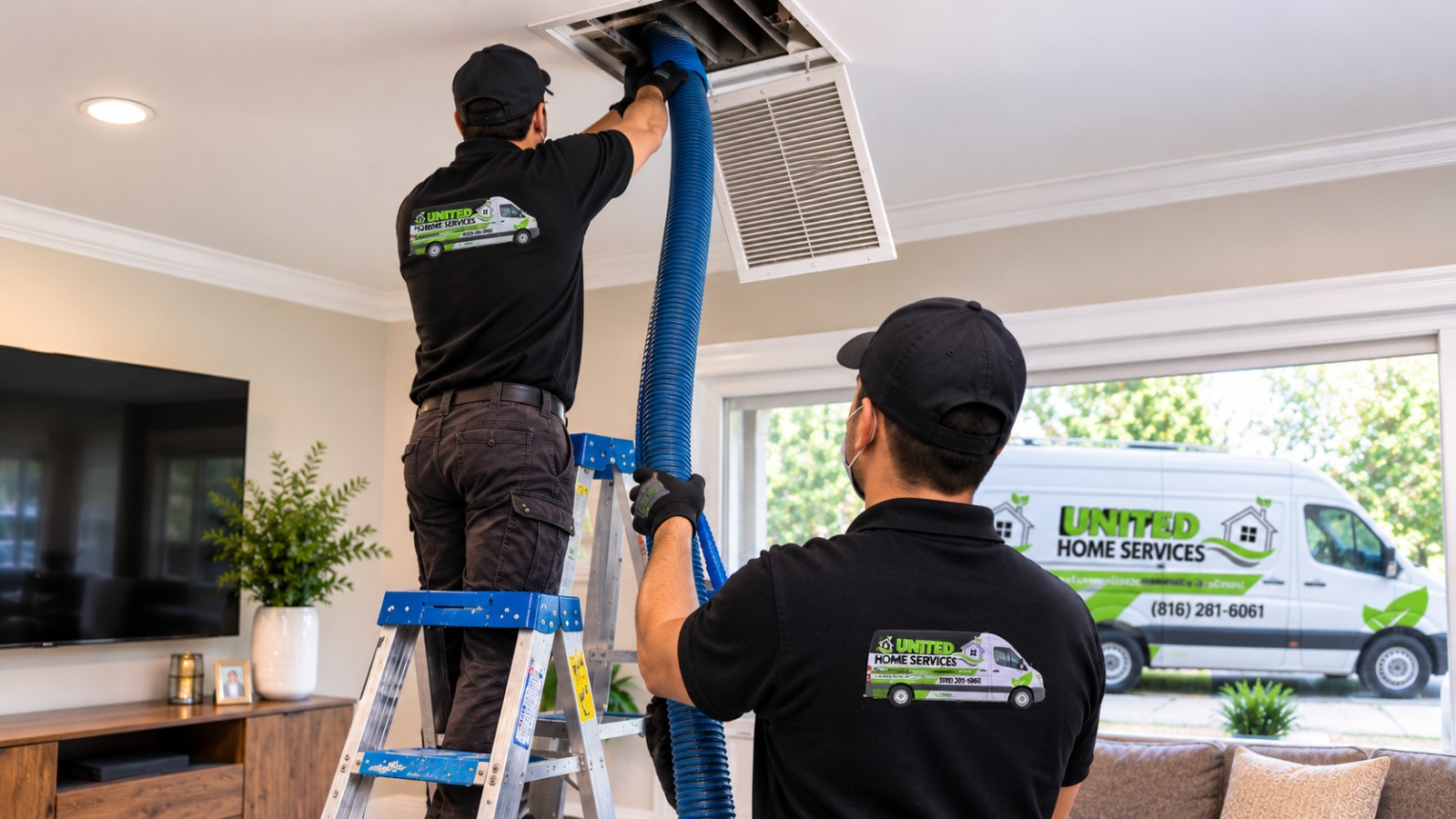
United Home Services offers air duct services in Plano, including inspection, cleaning, and repair. Its local service information describes customized repair solutions for ductwork problems that can contribute to poor airflow, indoor air quality concerns, and HVAC performance issues.
The company also highlights several aspects of its service approach:
- More than 20 years of business experience.
- Licensed and insured technicians.
- NADCA and EPA certifications as stated on its website.
- Warranty information for its services.
- Free consultation and estimate options.
- Emergency service availability.
Rather than assuming that every airflow concern requires extensive work, homeowners can arrange an assessment to understand the condition of their duct system and discuss suitable repairs.
You can also visit the United Home Services website to learn more about its home services.
Simple Ways to Keep Repaired Ductwork in Better Condition
Once a duct problem has been corrected, a few maintenance habits can help homeowners monitor the system and identify developing issues.
- Replace HVAC filters regularly: Follow the filter manufacturer’s recommendations and account for household conditions such as pets and dust.
- Keep supply registers unobstructed: Furniture, rugs, and curtains should not block the airflow outlets.
- Pay attention to recurring temperature differences: A room that repeatedly becomes uncomfortable deserves investigation.
- Check accessible duct insulation: Look for visibly detached or damaged insulation without disturbing concealed components.
- Arrange inspections when performance changes: New noises, noticeable airflow reductions, and unexplained comfort problems warrant professional attention.
- Address moisture concerns: Condensation or visible moisture near ductwork should be investigated to identify the underlying source.
One additional precaution: avoid using ordinary cloth-backed duct tape as a permanent repair. ENERGY STAR recommends appropriate duct mastic or compatible metal-backed tape for suitable sealing applications.
Give Your HVAC System a Better Path to Deliver Comfort
A heating and cooling system can only distribute conditioned air effectively when its ductwork is in suitable condition. Small leaks, damaged connections, and restricted sections can gradually undermine the comfort homeowners expect from their HVAC equipment.
If your Plano home has persistent airflow problems, unexplained room-to-room temperature differences, or visible duct damage, investigating the distribution system is a sensible next step.
United Home Services is available to help Plano homeowners assess their air duct concerns and explore suitable repair solutions. Contact the team or request a free estimate through its website to discuss your ductwork needs.
Frequently Asked Questions
Can leaking air ducts make some rooms warmer than others?
Yes. When conditioned air escapes through leaking connections or damaged duct sections, less air may reach certain rooms. Other HVAC issues can produce similar symptoms, so the entire airflow system should be evaluated.
Is duct repair necessary if my air conditioner still works?
It can be. An air conditioner may continue producing cold air even when part of its distribution network is leaking or disconnected. Repairing ductwork can address problems that equipment maintenance alone will not resolve.
Can ductwork problems cause unusual sounds?
Yes. Loose connections, vibrating sections, restricted airflow, and poorly supported ducts can produce rattling, whistling, or other noises. The sound itself does not identify the exact problem, but it can help a technician narrow down the investigation.
Does every damaged duct need to be replaced?
No. The decision depends on the location, extent, and type of damage. A suitable joint repair or sealing treatment may resolve a localized problem, while severely deteriorated sections may need replacement.
Should I repair my ducts before replacing my HVAC system?
It is worth having the duct system evaluated before investing in new heating or cooling equipment. Existing leakage, poor airflow, or incorrectly sized ductwork can affect the performance of replacement equipment. ENERGY STAR specifically recommends evaluating ducts and addressing necessary repairs as part of quality HVAC installation.
How can I tell whether the problem is in the ductwork or the HVAC unit?
Start by noting whether the problem affects one room or the entire property. A single room with consistently weak airflow may indicate a local duct, register, or damper issue. Problems throughout the home may involve the filter, blower, thermostat, equipment, or main duct system. Professional diagnostics are needed to distinguish between these possibilities.
Does United Home Services offer air duct repair in Plano?
Yes. United Home Services lists air duct repair among its services for Plano, Texas. Homeowners can contact the company to discuss their concerns and request a service estimate.